
I traced a Forfar Bridie Recipe through old family notebooks and unearthed a little-known twist and ingredient that quietly shaped local baking traditions.
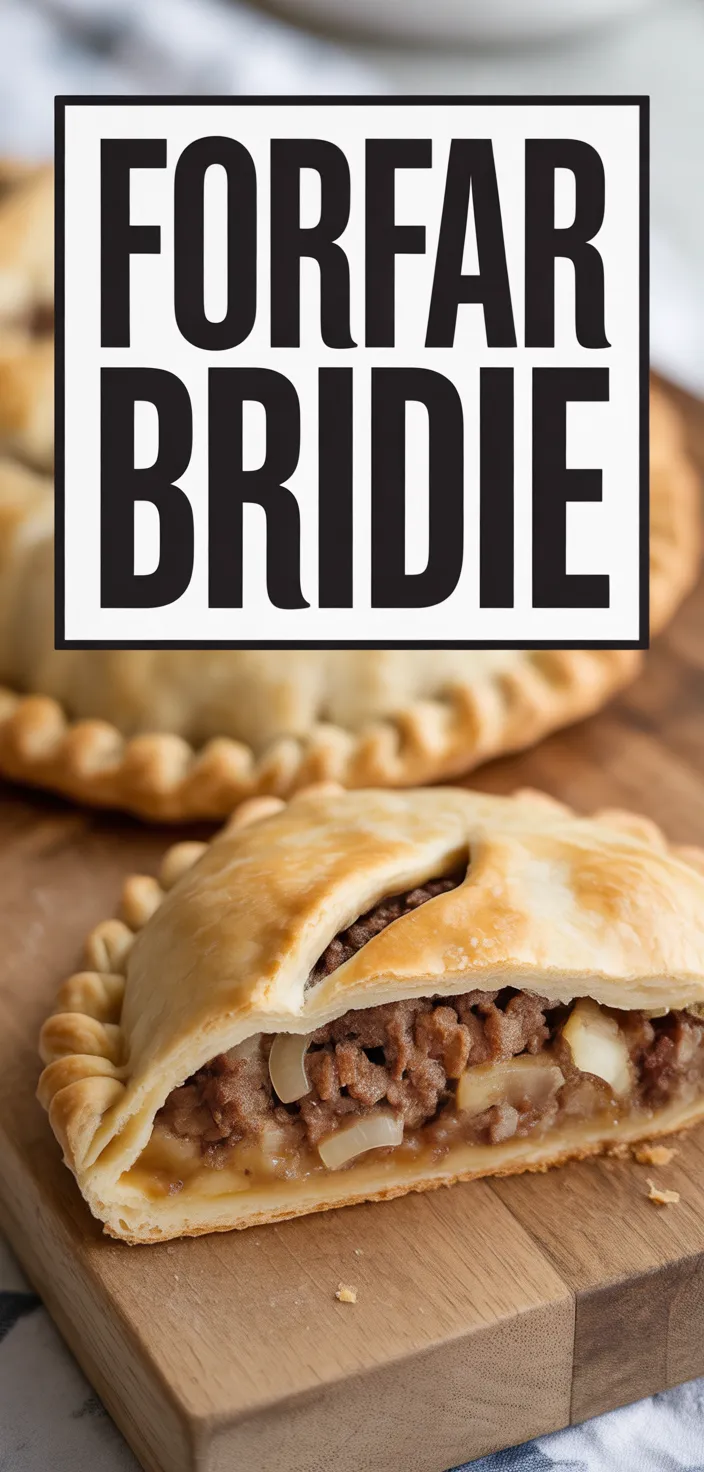
I’ve always had a soft spot for the Forfar Bridie Recipe, a Scottish Meat Pie Recipe that eats like a secret handed down in a greaseproof wrap. I remember the first bite, pastry made with plain flour that cracked with a little stubborn sound and a filling of minced beef that wasn’t trying to be fancy but punched above its weight.
There’s something rough and honest about it, not precious, and that makes me curious every time. I keep chasing tiny regional quirks and odd tips people swear by, wondering which version is the real one and which is just luck.
Ingredients
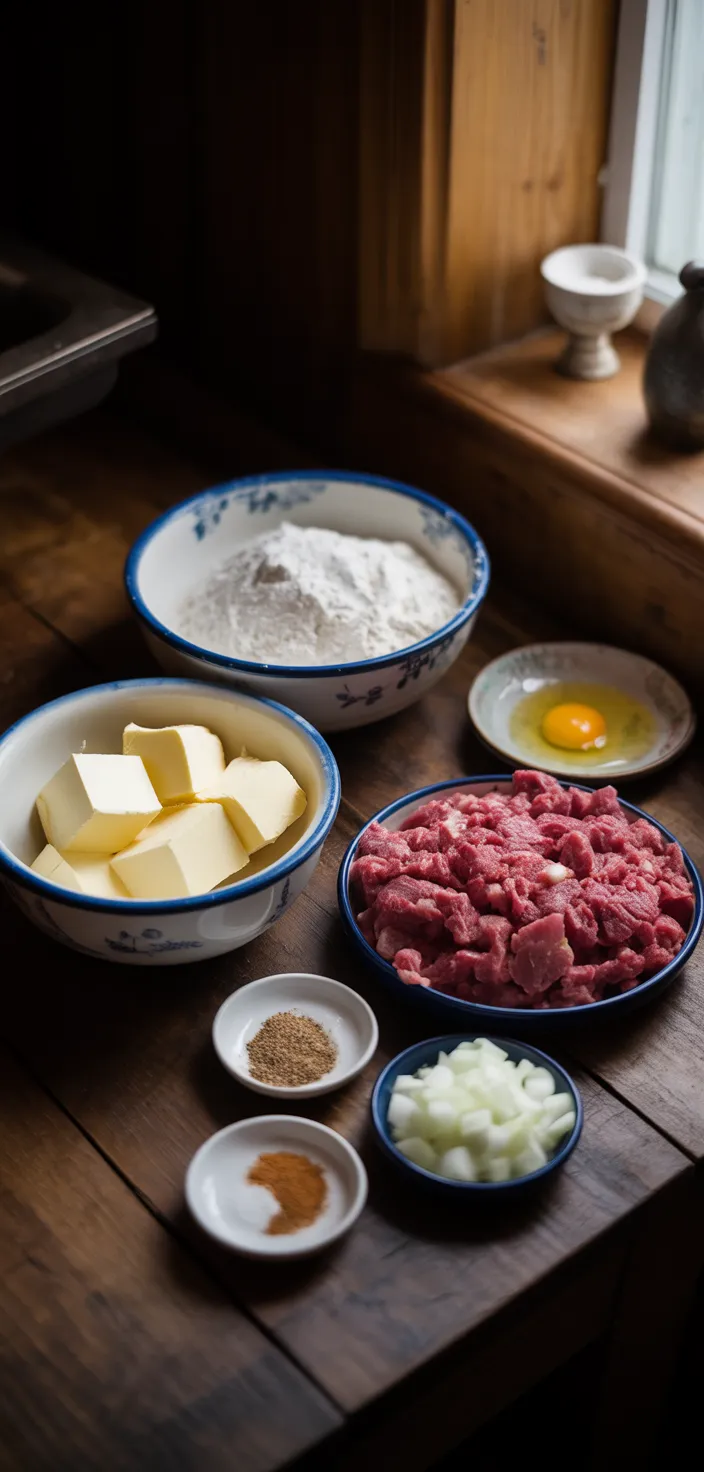
- Plain flour: gives structure and carbs, adds a bit of fibre, not very nutritious alone.
- Unsalted butter: rich in fat and flavour adds tenderness provides vitamin A not low calorie.
- Lard or beef dripping: traditional beefy fat, boosts savoury depth and flakiness, high in calories.
- Minced beef: main protein source, iron rich, keeps filling juicy, may be high in fat.
- Onion: adds sweetness and moisture when cooked offers fibre and antioxidants rounds flavour.
- Egg: binds pastry edges, adds colour and gloss, gives small protein boost and richness.
- Nutmeg or mace: tiny pinch gives warm aromatic lift, not sweet but enhances savoury notes.
Ingredient Quantities
- 450g plain flour
- 110g cold unsalted butter, cubed
- 110g lard or beef dripping, cubed (traditional)
- 1 tsp fine salt for the pastry
- 150ml cold water
- 500g minced beef or 250g beef and 250g pork if you like
- 1 medium onion, chopped
- 1 tsp sea salt for the filling
- 1/2 tsp freshly ground black pepper
- 1/4 tsp ground nutmeg or a pinch of mace, optional
- 1 egg, beaten
How to Make this
1. Put the flour and 1 tsp fine salt in a bowl, rub in the cold cubed butter and lard with your fingertips until the mixture looks like coarse breadcrumbs with some pea sized bits left, or pulse briefly in a food processor; keep everything cold so the pastry stays flaky.
2. Add the 150ml cold water a little at a time and bring the dough together gently, dont overwork it, flatten into a disc, wrap and chill in the fridge for about 30 minutes so it firms up.
3. Meanwhile make the filling: mix the 500g minced beef (or 250g beef plus 250g pork if you prefer) with the chopped onion, 1 tsp sea salt, 1/2 tsp freshly ground black pepper and the 1/4 tsp nutmeg or pinch of mace if using; combine with a fork until just mixed, don’t mash it into a paste.
4. Preheat the oven to 200C/400F (180C fan) and line a baking tray. Lightly flour your surface, roll the chilled pastry to about 3 to 4 mm thick and cut rounds roughly 12–14 cm across (you should get several depending on size).
5. Put a mound of filling in the centre of each round — about 75–100g each depending on how big you cut them — leave a good rim of pastry, fold over to make a half moon and press the edges to seal; crimp with fingers or a fork, patch any cracks with a little water.
6. Make a small slit or poke a hole on the top of each bridie so steam can escape; some people make a little pleat for the classic look if you wanna be fancy.
7. Brush each bridie with the beaten egg so they go a deep golden colour when baked.
8. Bake on the prepared tray for about 25–30 minutes until the pastry is golden and cooked through, rotate the tray halfway if your oven is uneven; if the tops brown too fast tent loosely with foil.
9. Let the bridies rest for 5–10 minutes after baking so the filling firms up a bit, then serve warm. If you want them juicier the next day, reheat gently in the oven rather than the microwave so the pastry stays crisp.
Equipment Needed
1. Kitchen scale and measuring spoons (for accurate weights and the tsp of salt)
2. Large mixing bowl (for pastry and for the meat filling)
3. Pastry cutter or food processor (to rub or pulse butter and lard into the flour)
4. Rolling pin and lightly floured surface or pastry board (to roll pastry to 3–4 mm)
5. Sharp knife and chopping board (to chop the onion and trim pastry)
6. Baking tray lined with parchment or a silicone mat (for baking the bridies)
7. Pastry brush and a fork (egg wash and to crimp/seal the edges)
8. Oven mitts and a cooling rack (safe handling and resting the bridies)
FAQ
Forfar Bridie Recipe – Scottish Handheld Meat Pies Substitutions and Variations
- 450g plain flour: swap for pastry/00 flour for a flakier crust, or use a gluten free plain flour blend 1:1 (add 1 tsp xanthan gum if the blend needs it).
- 110g lard or beef dripping: use chilled vegetable shortening or cold cubed butter (or half butter half olive oil) — shortening keeps it very flaky, butter gives richer flavour.
- 500g minced beef (or 250g beef + 250g pork): try minced lamb for a richer, gamey taste, or use turkey/chicken mince for a leaner pie, or a mushroom+lentil mix 1:1 as a vegetarian swap.
- 1 egg, beaten: brush with milk or single cream for a softer, paler finish, or use just egg white if you want less browning.
Pro Tips
– Keep everything rock cold. Cube the butter and lard, chill your bowl, and use short pulses in the food processor or rub quickly with your fingertips so the fat stays in pea sized pieces. If the dough gets warm it will lose its flakiness, so pop it back in the fridge whenever it feels soft or sticky.
– Don’t overwork either the pastry or the filling. Mix the meat with a fork until it’s just combined, don’t mash it into a paste, and handle the pastry gently when bringing it together. Overworking equals tough pastry and a dense filling.
– Check seasoning the easy way: fry a tiny pinch of the raw filling in a pan and taste it. That lets you adjust salt, pepper or nutmeg before you seal dozens of bridies that taste bland.
– If you want to freeze or make ahead, assemble on a tray, freeze until firm, then bag them. Bake from frozen adding 5 to 10 minutes, and always let freshly baked bridies rest 5 to 10 minutes so the juices set and you don’t burn your mouth.
Forfar Bridie Recipe – Scottish Handheld Meat Pies
I traced a Forfar Bridie Recipe through old family notebooks and unearthed a little-known twist and ingredient that quietly shaped local baking traditions.
6
servings
798
kcal
Equipment: 1. Kitchen scale and measuring spoons (for accurate weights and the tsp of salt)
2. Large mixing bowl (for pastry and for the meat filling)
3. Pastry cutter or food processor (to rub or pulse butter and lard into the flour)
4. Rolling pin and lightly floured surface or pastry board (to roll pastry to 3–4 mm)
5. Sharp knife and chopping board (to chop the onion and trim pastry)
6. Baking tray lined with parchment or a silicone mat (for baking the bridies)
7. Pastry brush and a fork (egg wash and to crimp/seal the edges)
8. Oven mitts and a cooling rack (safe handling and resting the bridies)
Ingredients
-
450g plain flour
-
110g cold unsalted butter, cubed
-
110g lard or beef dripping, cubed (traditional)
-
1 tsp fine salt for the pastry
-
150ml cold water
-
500g minced beef or 250g beef and 250g pork if you like
-
1 medium onion, chopped
-
1 tsp sea salt for the filling
-
1/2 tsp freshly ground black pepper
-
1/4 tsp ground nutmeg or a pinch of mace, optional
-
1 egg, beaten
Directions
- Put the flour and 1 tsp fine salt in a bowl, rub in the cold cubed butter and lard with your fingertips until the mixture looks like coarse breadcrumbs with some pea sized bits left, or pulse briefly in a food processor; keep everything cold so the pastry stays flaky.
- Add the 150ml cold water a little at a time and bring the dough together gently, dont overwork it, flatten into a disc, wrap and chill in the fridge for about 30 minutes so it firms up.
- Meanwhile make the filling: mix the 500g minced beef (or 250g beef plus 250g pork if you prefer) with the chopped onion, 1 tsp sea salt, 1/2 tsp freshly ground black pepper and the 1/4 tsp nutmeg or pinch of mace if using; combine with a fork until just mixed, don’t mash it into a paste.
- Preheat the oven to 200C/400F (180C fan) and line a baking tray. Lightly flour your surface, roll the chilled pastry to about 3 to 4 mm thick and cut rounds roughly 12–14 cm across (you should get several depending on size).
- Put a mound of filling in the centre of each round — about 75–100g each depending on how big you cut them — leave a good rim of pastry, fold over to make a half moon and press the edges to seal; crimp with fingers or a fork, patch any cracks with a little water.
- Make a small slit or poke a hole on the top of each bridie so steam can escape; some people make a little pleat for the classic look if you wanna be fancy.
- Brush each bridie with the beaten egg so they go a deep golden colour when baked.
- Bake on the prepared tray for about 25–30 minutes until the pastry is golden and cooked through, rotate the tray halfway if your oven is uneven; if the tops brown too fast tent loosely with foil.
- Let the bridies rest for 5–10 minutes after baking so the filling firms up a bit, then serve warm. If you want them juicier the next day, reheat gently in the oven rather than the microwave so the pastry stays crisp.
Notes
- Below you’ll find my best estimate of this recipe’s nutrition facts. Treat the numbers as a guide rather than a rule—great food should nourish both body and spirit. Figures are approximate, and the website owner assumes no liability for any inaccuracies in this recipe.
Nutrition Facts
- Serving Size: 245g
- Total number of serves: 6
- Calories: 798kcal
- Fat: 51.4g
- Saturated Fat: 23.7g
- Trans Fat: 0.3g
- Polyunsaturated: 3.3g
- Monounsaturated: 24.1g
- Cholesterol: 163mg
- Sodium: 863mg
- Potassium: 533mg
- Carbohydrates: 58.8g
- Fiber: 2.3g
- Sugar: 1.1g
- Protein: 30.2g
- Vitamin A: 212IU
- Vitamin C: 1.3mg
- Calcium: 34.5mg
- Iron: 3.2mg
